Running the air conditioner on full blast all summer can feel like a necessity, but it comes at a significant cost to both your wallet and the environment.
What if you could achieve a more comfortable home and better air quality simply by using your windows more strategically?
This is the principle behind passive ventilation, a smart, energy-efficient approach to cooling and freshening your home.
However, a passive cooling strategy that works for a coastal home in New England would be ineffective against the dry heat of Arizona. The key to success lies in understanding your specific climate. Generic advice falls short when dealing with regional challenges like Texas humidity, Colorado’s temperature swings, or Philadelphia's sticky summers.
That's why we've created this climate-specific guide. It’s the kind of practical, tailored advice our design consultants provide, helping you make the best decisions for your unique home and environment.
Mastering Ventilation Timing for Your Local Climate
Knowing when to open and close your windows is just as important as which windows you open. The goal is always the same exhaust stale, hot air and introduce cool, fresh air, but the timing varies dramatically depending on where you live.
- For the Hot & Arid Southwest (Phoenix, Las Vegas): In this region, the secret is harnessing the significant diurnal temperature swing. This strategy, often called "night flushing," takes advantage of the cool nighttime air. In a city like Phoenix, where daytime temperatures can soar past 110°F but drop into the low 80s at night, opening windows after sunset allows the cool air to flush out the heat stored in your home's thermal mass. This simple act can dramatically reduce your air conditioner's overnight runtime.
- For the Humid Subtropical Corridor (Dallas, Austin): Here, high humidity is the primary challenge, and letting in moist air during peak summer can make your A/C work even harder. The most effective passive cooling strategies for Texas homes are best used during the "shoulder seasons" of spring and fall. On less humid days, you can combat stuffiness and reduce energy costs by harnessing the prevailing southerly winds from the Gulf of Mexico to create a refreshing cross-breeze.
- For the Rocky Mountains (Denver, Colorado Springs): The physics of the "stack effect" are your best friend in high-altitude climates. Since hot air rises, you can create a natural chimney to achieve ventilation for Colorado mountain homes. In the cool evenings, open windows on a lower level (like a walk-out basement common in Denver) and upper-level windows, such as clerestory windows. This pulls the cool mountain air in from below and pushes the warm air out from above, circulating fresh air throughout your entire home.
- For the Northeast & Coastal (Cape Cod, Philadelphia): To manage summer humidity, timing your ventilation with the sea breeze is essential. For homeowners in coastal New England or South Jersey, opening windows on the ocean-facing side of your home in the afternoon introduces a natural, cool breeze. This provides both cooling relief and vital air exchange on humid days without over-taxing your HVAC system.
The Right Window Style for Your Home's Architecture & Airflow
Beyond timing, the style of your windows plays a critical role in both ventilation and preserving your home's character. The right window should complement your home's design while maximizing its ability to capture breezes and promote airflow.
- In the Southwest: Low-profile casement windows are an excellent architectural fit for the region's sprawling Ranch-style homes and Pueblo-style architecture. Their crank-out design allows them to act like a sail, catching and directing breezes into the home. However, any ventilation strategy must be paired with superior solar heat management. That's why casement windows must be specified with advanced glazing like Renewal by Andersen's SmartSun™ glass, which is engineered with a low Solar Heat Gain Coefficient (SHGC) to block the sun's intense heat when the windows are closed.
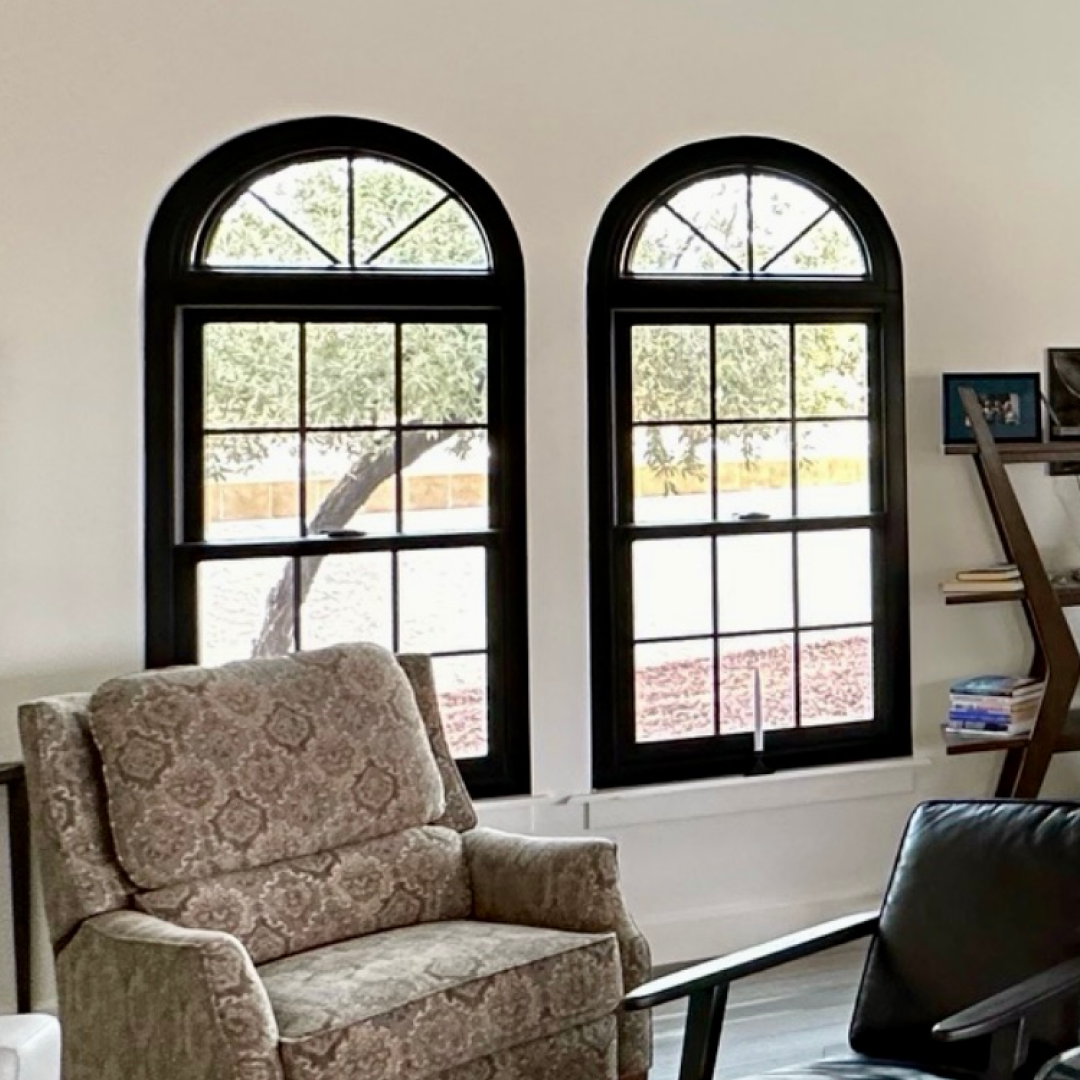
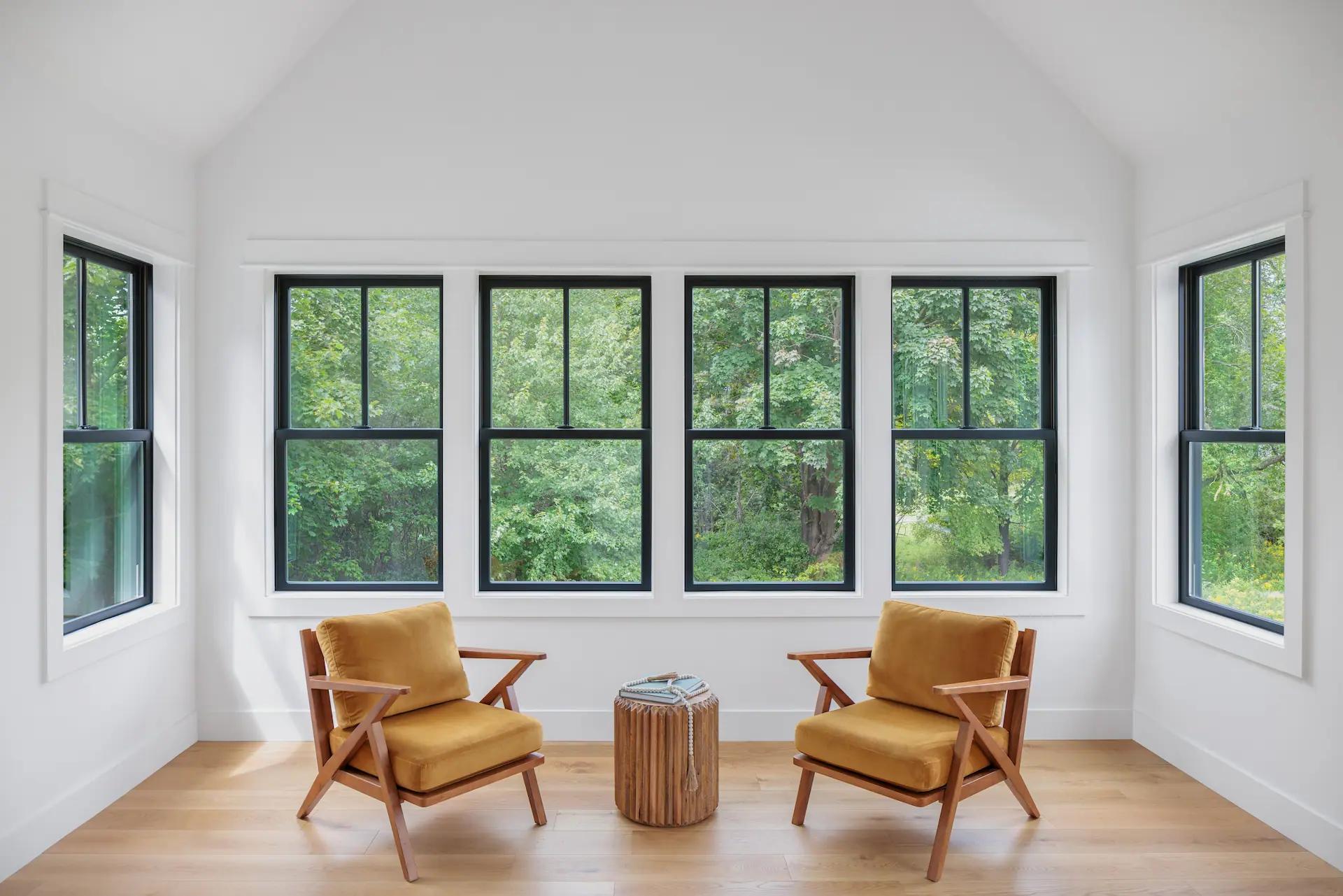
- In Texas and Oklahoma: The classic look of double-hung windows is a perfect match for the prevalent Colonial architecture and Ranch-style homes found in Dallas and Austin. Their functionality is equally important. By opening the bottom sash on the windward side of the house and the top sash on the leeward side, you can use double-hung windows to create an efficient stack effect, exhausting the hot, humid air that naturally rises to the ceiling.
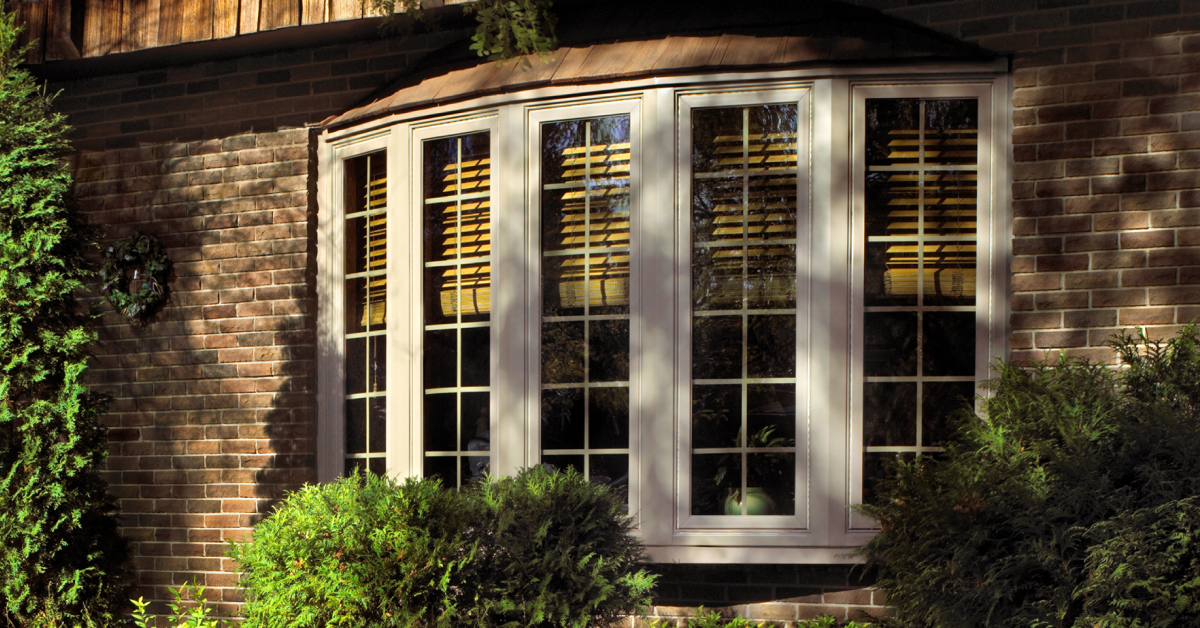
- In the Rockies: Mountain Modern and Craftsman homes often feature large picture windows to capture stunning views, but these fixed windows present a ventilation challenge. The best window design for high altitude climates often involves pairing these large fixed panes with operable casement or awning windows. Awning windows, which are hinged at the top and open outward, are particularly useful for providing ventilation even during the common afternoon thunderstorms.
- In the Northeast: For the region's historic Colonial, Victorian, and Cape Cod homes, double-hung windows are the most architecturally appropriate choice. In historic neighborhoods from Philadelphia to Portland, maintaining a classic style is as crucial as functional ventilation. Double-hung windows deliver on both fronts, preserving timeless curb appeal while offering excellent airflow control.
Why Window Material Durability is Climate-Specific
A window's ability to operate smoothly and seal tightly for years depends entirely on its frame material. In regions with extreme weather, "durability" means something different everywhere you go. This is where the engineering behind a material like Fibrex® becomes a critical advantage.
- In the Hot & Arid Southwest: Durability means thermal stability. In Arizona's extreme temperature swings, materials like vinyl can expand and contract, leading to seal failure, warping, and lost A/C efficiency. Fibrex® material's low expansion rate ensures your windows maintain their weathertight seal. It’s also engineered to resist fading and degradation under intense, year-round UV exposure.
- In the Humid Subtropical Corridor: Durability means strength and impact resistance. For homes in North Texas and Oklahoma's "hail alley," the structural strength of the window frame is paramount. The robust composition of Fibrex® material provides the rigid support needed for impact-resistant glass options, offering an essential layer of protection against severe weather.
- In the Rocky Mountains: Durability means superior insulation and UV resistance. At high altitudes like Denver, a window's insulating properties, measured by its U-Factor, are crucial for preventing heat loss during frigid winters. Fibrex® material's excellent insulating properties help keep your home warm, while its composite formulation resists the accelerated breakdown caused by intense high-altitude UV radiation.
- In the Northeast & Coastal: Durability means resistance to moisture and corrosion. For homes exposed to the persistent humidity and salt air corrosion of the Atlantic coast in Maine or New Jersey, wood can rot and aluminum can pit and corrode. Fibrex® material is guaranteed not to rot, flake, or corrode, ensuring long-term performance and peace of mind.
Frequently Asked Questions
Q: What are the best passive cooling strategies for Texas homes?
A: In Texas, focus on ventilating during the less humid spring and fall to reduce A/C use. Use double-hung windows to create a stack effect, exhausting hot air, and orient openings to capture southerly winds from the Gulf.
Q: What are the best replacement windows for Arizona heat?
A: The best windows combine ventilation with solar heat blocking. Casement windows are great for catching breezes, but they must be paired with high-performance glass like SmartSun™ glass, which has a low SHGC to block solar heat gain when closed. The window frame material must also be thermally stable, like Fibrex® material, to withstand extreme temperature changes.
Q: How can I achieve natural ventilation in my Colorado mountain home?
A: Utilize the stack effect. Open lower-level windows and upper-level windows simultaneously in the cool evenings. This creates a natural chimney effect, pulling cool air in from below and pushing warm air out through the top.
Q: What are the best coastal windows for New England humidity?
A: Double-hung windows are architecturally appropriate and functional. More importantly, choose windows made from a material resistant to moisture and salt air corrosion, like Fibrex® material, which will not rot, flake, or corrode over time.
Q: How can I reduce A/C costs in Dallas?
A: Use natural ventilation during the spring and fall shoulder seasons to give your A/C a break. When your windows are closed during peak summer, ensure they are highly efficient with low-E glass and frames made from a strong, stable material like Fibrex® to prevent seal failure and energy loss.
Q: What is the best window design for high altitude climates?
A: To preserve views without sacrificing airflow, pair large picture windows with operable windows like casements or awnings. Awning windows are especially useful as they allow for ventilation even during rain or snow.
Q: How can I manage summer humidity in a Philadelphia home?
A: Use cross-ventilation by opening windows on opposite sides of your home to create a breeze. Double-hung windows, common in Philadelphia's Colonial architecture, can also be used to vent hot air that collects near the ceiling by opening the top sash.
The Right Ventilation Strategy Starts with the Right Partner
Working with your local climate, not against it, is the most effective way to create a more comfortable and energy-efficient home. A successful passive ventilation strategy depends on the right timing, the right window styles for your architecture, and the right materials to ensure long-term performance.
Understanding how all these elements work together for your specific home can feel complex, but you don't have to figure it out alone.
The teams at Renewal by Andersen are your local experts, dedicated to a start-to-finish process that ensures you get the perfect solution for your home. If you’re ready to explore climate-smart solutions, schedule a free, in-home consultation with us today.
Schedule a Consultation