The shift toward dramatic exterior color palettes has fundamentally changed how homeowners approach window replacement. Dark window frames, once reserved for high-end custom builds, have become a mainstream design choice across every market from Phoenix to Philadelphia. Renewal by Andersen has responded to this design evolution with factory-bonded dark finishes engineered specifically for the thermal and UV conditions homeowners actually face. Black, dark bronze, and matte charcoal frames now define modern curb appeal, creating striking architectural contrast that instantly elevates a home's exterior presence. This is not a passing trend. Multi-year data from Houzz, Pinterest, and Google search behavior confirms that dark-framed windows have maintained top-10 status in exterior renovation requests for five consecutive years.
The critical difference is not just color availability, but material compatibility. When you schedule an in-home consultation with a Renewal by Andersen Project Consultant, you are not just selecting a color. You are making a material decision that will determine whether your windows still look exceptional in year fifteen, or whether they become a maintenance liability long before that.
The challenge is straightforward: most window companies offer dark colors on materials that were never designed to carry them. Understanding why that matters requires looking at both the design case for bold exteriors and the physics of how dark pigments interact with frame materials under real-world sun exposure.
Designing Your Home's Exterior with Modern Dark Tones
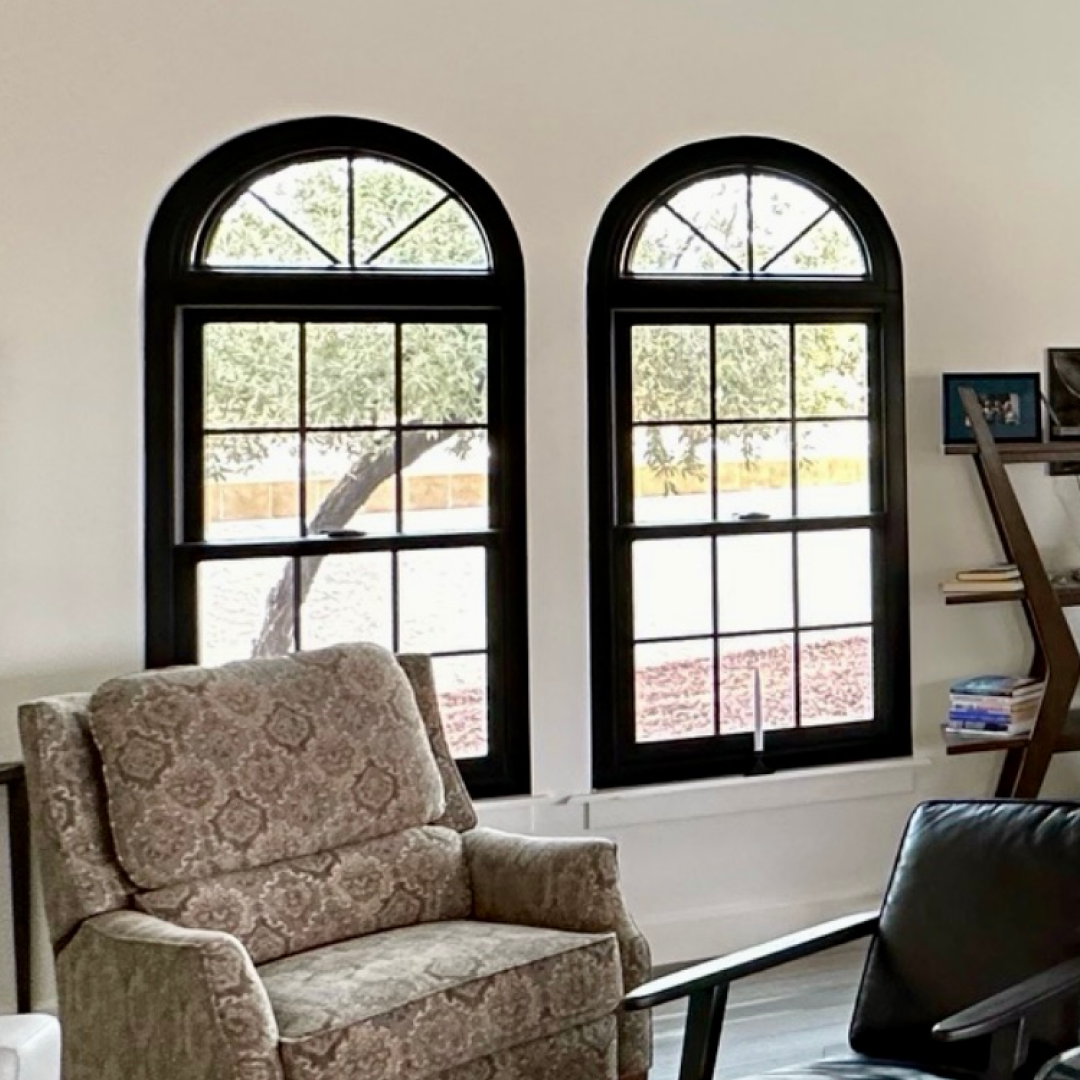
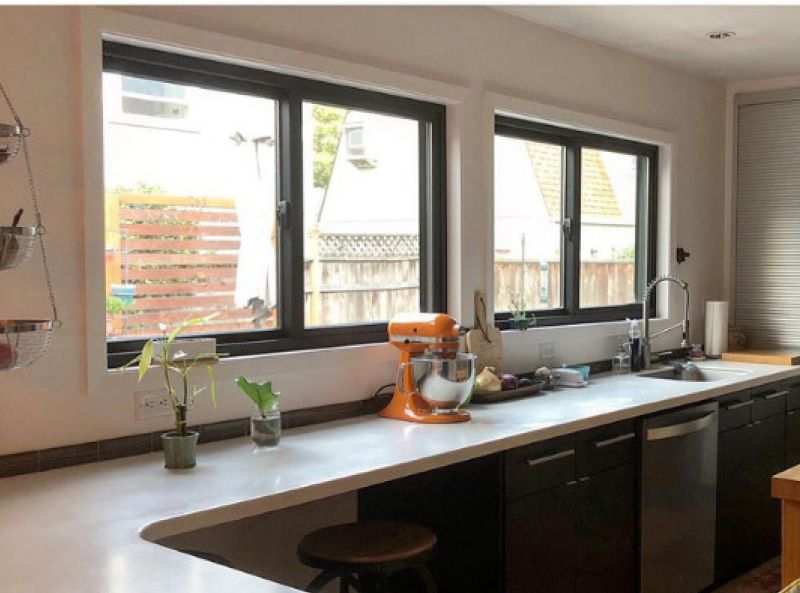
The architectural preference for dark window frames reflects a broader movement toward defined exterior silhouettes and intentional material contrast. Where previous generations treated window frames as background elements meant to disappear into siding or trim, contemporary design uses frames as deliberate visual anchors. Black frames against white farmhouse siding, dark bronze against natural stone, charcoal against fiber cement: these combinations create depth and dimension that light-colored frames simply cannot achieve.
This design shift has been particularly strong in markets with active renovation cultures. Dallas homeowners are pairing dark frames with modern horizontal siding. Philadelphia and West Chester PA renovations are using black frames to modernize Victorian and Colonial exteriors without losing historic character. Austin's design-forward market has embraced dark bronze as a signature look for both ranch-style updates and new construction replacements. Cape Cod and Rhode Island coastal properties are moving toward matte black frames that complement shingle-style architecture while maintaining clean, contemporary lines.
The in-home consultation with a Renewal by Andersen Project Consultant is where your design vision meets structural reality. A Project Consultant evaluates your home's specific exposure, reviews your existing frame construction to determine whether full-frame or insert replacement is appropriate, and shows you actual color samples in the lighting conditions of your home. This is not a sales pitch. It is a technical assessment that ensures the color you choose will perform in your specific climate, on your specific home, for decades.
Window frames are now key design features that frame exterior views and define your home's architectural identity. The question is whether the material carrying that design can actually sustain it.
Thermal Expansion: How Material Stability Protects Dark Colors
Dark pigments absorb solar radiation at significantly higher rates than light-colored surfaces. This is basic physics. A black or dark bronze window frame in direct summer sun in Phoenix, Las Vegas, or West Texas can reach surface temperatures of 160 to 185 degrees Fahrenheit. Standard vinyl begins to soften and lose dimensional stability at approximately 140 to 160 degrees Fahrenheit. The material incompatibility is absolute: dark-colored vinyl frames in high-heat markets regularly exceed the thermal tolerance threshold of the material itself.
When vinyl frames soften under thermal load, the consequences compound rapidly. Sashes stick or fail to close properly because the frame geometry has warped out of alignment. Glass seal units lose their compression geometry, allowing the inert gas fill to escape and moisture to enter between the panes. The frame's structural integrity degrades progressively, and what began as a cosmetic issue becomes a functional failure. This is not a manufacturing defect. It is a predictable outcome of applying dark pigment to a material that cannot handle the resulting heat load.
Fibrex® material, Renewal by Andersen's proprietary composite of reclaimed wood fiber and thermoplastic polymer, has a significantly higher thermal stability threshold and a coefficient of thermal expansion approximately half that of standard vinyl. It does not soften under dark-pigment solar loads. It does not warp. It does not compromise glass seal integrity. The factory-bonded color finish on Fibrex® material is not a surface paint but an integral part of the extrusion process, meaning it does not peel, blister, or fade under the UV and thermal conditions that destroy painted vinyl frames.
This is the material advantage that makes dark finishes viable in extreme climates. Fibrex® material handles dark finishes easily across all temperatures without warping, blistering, or losing its seal. The performance difference is not incremental. It is categorical.
Thermal Engineering of Color: Dark Pigments on Stable Composites
The long-term property value argument for factory-bonded composite color finishes versus painted vinyl frames is quantifiable across a 30-year lifecycle. Homeowners in Boulder, Colorado Springs, and Cape Cod markets, where home equity values are closely scrutinized and buyers expect durable exterior upgrades, understand this calculation intuitively. The question is not just what your windows look like in year one. The question is what they contribute to your home's value in year twenty-five.
Performance Category: Color Integrity (Year 10)
Basic Painted Vinyl Frame: Visible fading, chalking, or peeling common in high-UV markets; repainting required
Factory-Bonded Fibrex® Composite Material: Factory-bonded finish retains original color depth; no repainting required
Performance Category: Structural Integrity (Year 15 to 20)
Basic Painted Vinyl Frame: Thermal warping and glass seal failure increasingly common, particularly in dark colors; replacement or repair costs accumulate
Factory-Bonded Fibrex® Composite: Frame geometry maintained across temperature extremes; glass seal units remain properly compressed; no structural degradation
Performance Category: Home Equity Impact (Year 25 to 30)
Basic Painted Vinyl Frame: Deteriorated frames visible to buyers; potential inspection flags; reduced curb appeal value
Factory-Bonded Fibrex® Composite Material: Frames retain original appearance; contribute to sustained curb appeal and positive pre-sale inspection outcomes
This is the data-driven case for choosing material stability over commodity pricing. Factory-bonded composite color finishes protect long-term property values because they eliminate the recurring maintenance and replacement costs that erode the initial savings of lower-tier painted frames.
Spotting Failures in Lower-Tier Painted Window Frames
The physical warning signs of heat-damaged or thermally compromised window frames are identifiable before they reach critical failure. Recognizing them is the trigger for a consultation.
Peeling or chalking frame paint, particularly on south-facing and west-facing exposures in high-UV markets like Phoenix, Dallas, and Las Vegas, is the first visible sign of UV degradation of surface coatings on painted vinyl. Stuck or binding sashes are a direct result of thermal warping in the frame body. The sash no longer aligns with the frame geometry, making opening and closing difficult or impossible. Failed glass seals appear as fogging, condensation, or a hazy film between panes. This occurs when the frame warps enough to break the compression seal on the insulated glass unit, allowing the inert gas fill to escape and moisture to enter. Faded or inconsistent trim color is particularly visible on dark-colored frames that have been exposed to years of direct UV in Sun Belt markets.
Consulting with a Renewal by Andersen Project Consultant allows you to accurately assess whether your current damage is cosmetic or structural, determine whether a full-frame or insert replacement is appropriate for your home's construction, and correctly match color selection to your local climate conditions. This consultation ensures the replacement investment performs over the full lifecycle, not just the first five years.
If you are seeing any of these warning signs, or if you are planning an exterior renovation and want to ensure your dark frame selection is built on the right material foundation, the in-home consultation is where that decision is made correctly.
Ready to See the Difference Factory-Bonded Fibrex® Material Makes on Your Home?
Dark window frames are one of the most powerful upgrades you can make to your home's exterior, but only when they're built on a material that can actually handle the job. Don't let a commodity vinyl frame turn your design vision into a maintenance problem.
Schedule your free, no-obligation in-home consultation with a Renewal by Andersen Project Consultant today. We'll bring the color options, assess your home's specific climate exposure, and show you exactly how factory-bonded Fibrex® material frames will look, and last, on your home.