
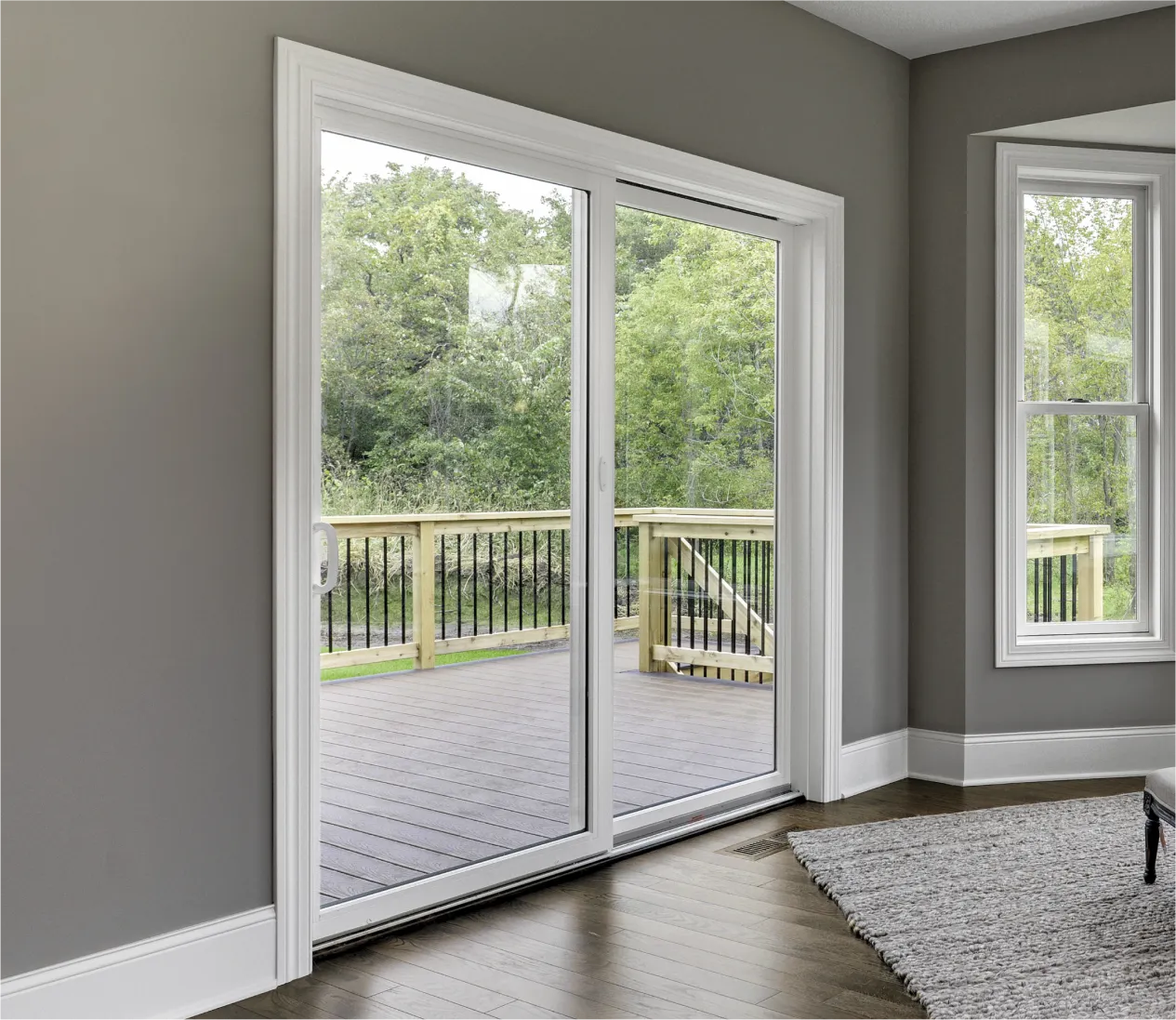
That familiar struggle with a sliding glass door—the scrape, the shudder, the sheer force required to open it—is a frustration for homeowners everywhere. You clean the tracks, lubricate the rollers, and maybe even adjust the screws, hoping for a smooth glide. It works for a while, but soon enough, the problem returns.
While many online guides focus on these temporary mechanical fixes, they often miss the real question: Why does your door keep needing adjustment? The answer isn't just about worn-out parts; it's about your local environment. The constant battle between your home and the climate is often the true cause of chronic patio door failure.
This guide serves as a diagnostic tool to help you understand the specific environmental stressors in your region that cause sticking, drafts, and misalignment. Instead of just treating the symptoms, we'll explore the root causes and explain why a material-based solution is often the only permanent fix.
Diagnosing the Root Cause: How Your Climate Affects Your Door
A sliding door that operates smoothly relies on a stable, square frame and a clear, level track. When environmental forces cause materials to expand, contract, warp, or shift, that delicate balance is lost. Here’s how it happens in different parts of the country.
The Hot/Arid Southwest Challenge (Phoenix, San Antonio, Las Vegas)
In the intense heat of Arizona and Texas, materials are put to the ultimate test.
- Extreme Heat & Solar Radiation: Vinyl frames, a common choice for patio doors, can soften and warp under constant exposure to 100°+ F temperatures and direct solar radiation. This distortion causes the door panel to bind against the frame, making it difficult to slide.
- Expansive Clay Soil: Much of Texas and Oklahoma is known for its expansive clay soil, which swells when wet and shrinks dramatically when dry. This constant soil movement can cause foundations to shift, throwing the entire door frame out of square and leading to persistent misalignment.
- Abrasive Debris: The "dirt" in your tracks isn't just household dust. In Arizona, fine sand from haboobs and high winds in West Texas acts like sandpaper, grinding down rollers and damaging the track itself over time.
The Rocky Mountain High-Altitude Stress (Denver, Colorado Springs)
Homes in Colorado and other high-altitude areas face dramatic temperature shifts and intense weather.
- Freeze-Thaw Cycles: The ground here is subject to a relentless freeze-thaw cycle. Moisture in the soil freezes and expands, heaving the ground (and your home's foundation) upwards, only to settle again when it thaws. This repeated stress can warp door frames and cause chronic operational issues.
- Ice and Snow Buildup: Compacted snow and ice in the door track is a primary cause of winter operational failure. Forcing a door over this buildup can damage both the rollers and the track, leading to problems long after the snow has melted.
- High-Altitude UV Exposure: The sun's UV rays are significantly more intense at high altitudes. This high-altitude UV exposure degrades vinyl seals, gaskets, and plastic roller components at an accelerated rate, causing them to become brittle and fail prematurely.
The Northeast & Mid-Atlantic Climate (Coastal RI, ME, MA, CT)
From the coast of Maine to the shores of New Jersey, moisture is the primary adversary.
- Salt Air Corrosion: For homes near the coast, the salty, humid air is highly corrosive. This salt air corrosion quickly damages metal components like steel rollers, tracks, and hardware, leading to rust, pitting, and eventual seizure.
- High Humidity & Swelling: Wood-framed patio doors are particularly vulnerable to the high summer humidity. Wood absorbs moisture from the air and swells, causing the door to stick tight in its frame. When the air dries out in winter, the wood shrinks, creating gaps that lead to drafts.
- Winter Ice: Just like in the mountains, melting and refreezing precipitation can create ice dams in the track, making the door difficult or impossible to open without risking damage.
More Than a Draft: The Real Cost of a Poor Seal
When a door is misaligned, the first casualty is its weathertight seal. This isn't just a matter of comfort; it's a direct hit to your wallet, though the reasons vary by region.
- In the Southwest: A poor seal isn't a "draft"—it's an open invitation for 110°F air to pour into your home. This overloads your air conditioning system, causing it to run constantly and sending utility bills soaring. A door with a low Solar Heat Gain Coefficient (SHGC) is crucial, but it's only effective if the frame is stable enough to maintain its seal.
- In the Rocky Mountains: Energy efficiency is a year-round challenge defined by large diurnal temperature swings. A tight seal must keep frigid winter air out and block the intense summer sun. This requires glass with both a low U-Factor (to prevent heat loss) and a low SHGC (to block heat gain). A frame that warps with temperature changes can't provide that consistent protection.
- In the Northeast & Mid-Atlantic: The primary battle is against winter heat loss. A drafty patio door can be a major source of energy waste, directly translating to higher heating oil or natural gas costs. In the summer, a bad seal allows damp, humid air inside, making your home feel stuffy and forcing your A/C to work harder to dehumidify the air.
The Cycle of Adjustments vs. A Permanent Material Solution
If you find yourself constantly adjusting your patio door, it's a clear sign that the door's materials are failing in your climate.
- Vinyl can warp and soften in the extreme heat of Phoenix or Dallas.
- Wood can swell shut during a humid Philadelphia summer and is susceptible to rot.
- Aluminum frames conduct heat and cold, and their components can corrode in the salt spray of Cape Cod.
This is why Renewal by Andersen patio doors are built with frames made from our exclusive Fibrex® material. This revolutionary composite is twice as strong as vinyl, impervious to moisture, and remains stable in all climates. It will not rot, corrode, soften in extreme heat, or become brittle in the cold.
Because Fibrex® material retains its shape and strength regardless of the weather, it protects the integrity of the door's weathertight seals year after year. This ends the frustrating cycle of seasonal adjustments and provides a low-maintenance, long-term solution engineered to perform in your specific environment.
Frequently Asked Questions
Why is my sliding door sticking in the Texas heat? Extreme heat can cause vinyl door frames to soften and warp, causing the door to bind. Additionally, the expansive clay soil common in Texas can shift your home's foundation, forcing the door frame out of square.
How do I adjust my patio door for winter in Colorado? While mechanical adjustments can provide a temporary fix, the root cause is often environmental. Freeze-thaw cycles can warp the frame, and ice buildup can block the track. A door made from a thermally stable material like Fibrex® material is designed to withstand these temperature swings without needing constant seasonal readjustment.
What is the best coastal patio door maintenance for my Rhode Island home? For coastal homes, the biggest challenge is salt air corrosion attacking metal components. Choosing a door with corrosion-resistant hardware and a frame material that won't rot or corrode, like Fibrex® material, is the most effective long-term maintenance strategy.
How can I stop drafts from my sliding door in Phoenix, AZ? Drafts in Phoenix are often an influx of extreme heat caused by a failed seal. This is typically due to a frame material, like vinyl, that has warped under intense sun. A permanent solution involves a door made from a dimensionally stable material that maintains its seal year-round.
Why does my sliding door keep getting misaligned? Recurring misalignment is almost always caused by environmental factors. This can include foundation shifting from expansive soils (TX, OK), ground heaving from freeze-thaw cycles (CO), or the frame material itself warping due to heat or moisture.
What is the best patio door material for high altitude? The best materials for high altitude are stable across wide temperature swings and resistant to intense UV exposure. Fibrex® material is an ideal choice as it doesn't become brittle in the cold, warp in the sun, and its factory-applied colors resist fading from UV rays.
Are there salt air resistant sliding doors for Connecticut homes? Yes. Renewal by Andersen gliding patio doors are an excellent choice for coastal Connecticut homes. Our Fibrex® material frames will not corrode or rot, and we offer a range of hardware finishes designed to resist the effects of salt air.
End the Frustration with a Lasting Solution
A patio door should provide effortless access to the outdoors, not be a source of constant frustration. If you're tired of the endless cycle of adjustments, it’s time to consider that the problem may not be the door’s alignment, but its very composition.
At Renewal by Andersen, our start-to-finish process begins with a professional consultation to properly diagnose the unique challenges your home faces. We provide solutions that are not just beautiful, but are engineered to deliver lasting performance and peace of mind in your local climate. Schedule your free, in-home consultation today.
Schedule a Consultation